
Written by Ansu Susan Kuriakose, BPT · Clinically reviewed by Jasmal K, BPT, MPT · Last reviewed 5 October 2026
Osteoporosis and back pain: safe exercise and physiotherapy
Osteoporosis makes bones weaker and more likely to break, including the bones of the spine. Many people with osteoporosis worry that exercise is risky. In fact, the right exercise is an important part of managing it: it can help build bone strength, reduce falls, and ease pain from spinal fractures.
At Maana Spine, we adapt treatment to your bone health, and treatment varies with how severe your osteoporosis is.
Book a Spine Assessment · or call or WhatsApp +91 99950 09403
What is osteoporosis?
Osteoporosis means bones have become less dense and more fragile. It's usually diagnosed by a doctor using a bone density scan (DXA scan). It often has no symptoms until a bone breaks.
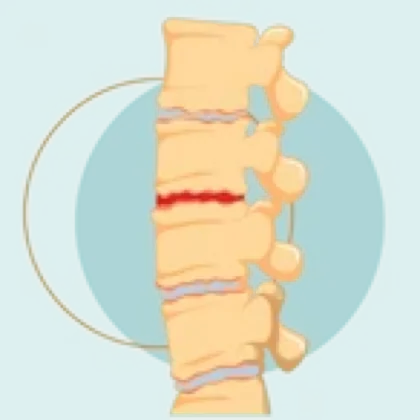
In the spine, weakened vertebrae can develop compression fractures, where a bone partly collapses. These can happen after a minor fall, lift, cough or sneeze, and sometimes without any clear cause. They can cause back pain, loss of height, or a stooped (rounded) upper back.
When back pain needs a doctor
Medicines to strengthen bones are prescribed by a doctor. Physiotherapy works alongside medical care.
How it's assessed
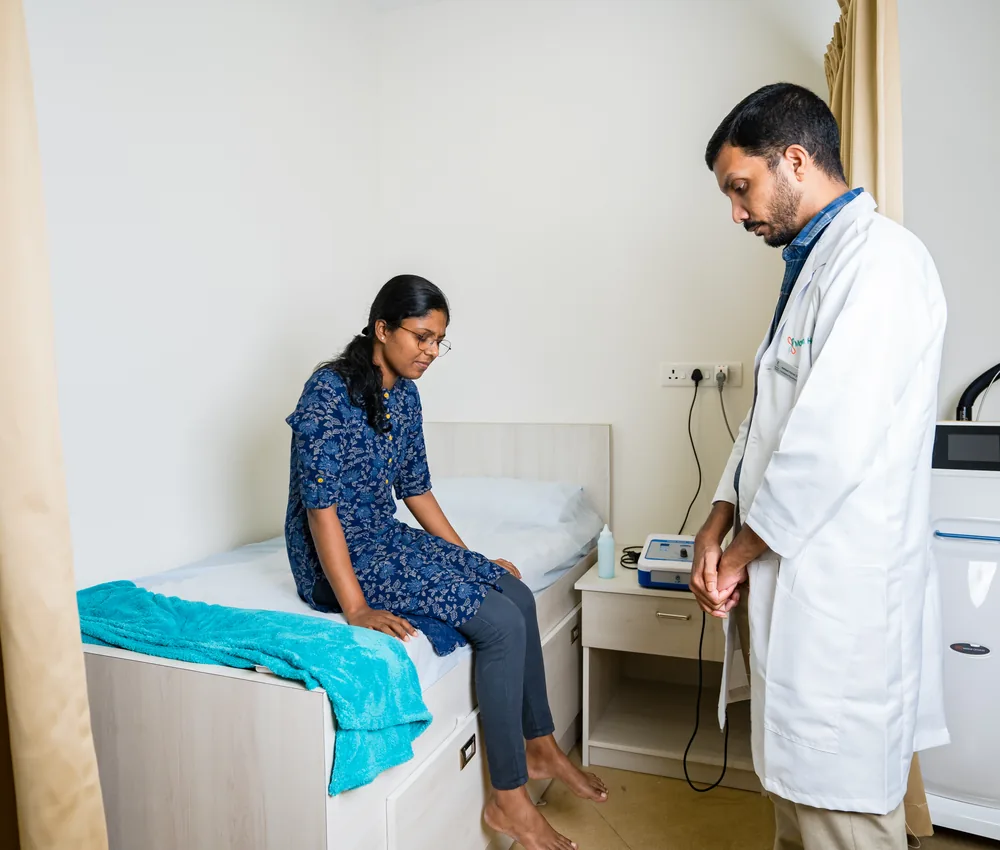
At your Maana Spine assessment, your physiotherapist asks about your bone health, any fractures, falls and medicines, checks your posture, strength and balance, and reviews any bone density, X-ray or MRI reports you bring. If you may have a new fracture, we'll refer you to a doctor before starting treatment.
You'll get a physiotherapy diagnosis and a personalised plan. You don't need a scan to book; if one would help, your physiotherapist will recommend an MRI or X-ray.
How we approach osteoporosis at Maana Spine
Osteoporosis follows a special adaptation of Maana Spine DTX™. Exercise and pain management (short-term pain relief, such as cold therapy and electrotherapy) are part of every plan, and other treatments depend on your bone health:
 Assess: we review your bone health, fracture history and falls risk, and rule out any new fracture.
 Decompress or PST: if you have low bone density (osteopenia), spinal decompression using US FDA 510(k)-cleared technology may be used where it suits your condition. If you have osteoporosis, or severe osteoporosis with a fracture, we use pulsed signal therapy (PST), a CE-marked treatment, instead, and refer you to a doctor for medication.
 Restore: pain management, gentle mobility work and physiotherapist-led stretching, adapted to protect your spine.
 Strengthen: our four-level exercise roadmap (Level 1 Restore, Level 2 Stabilise, Level 3 Strengthen, Level 4 Maintain), adapted for osteoporosis, with strength, balance and back-strengthening exercises.
 Empower: safe ways to lift, bend, move and prevent falls at home, with written and app-based home exercise programmes.
 Maintain: in-person follow-up at 1, 3, 6 and 12 months. The 1- and 3-month follow-ups are included in your program fee; the 6- and 12-month reviews are charged separately.
A DTX program is typically 15 to 25 sessions of 60 to 75 minutes each. Your physiotherapist will tell you after your assessment how many you're likely to need.
What the research says
Exercise is recommended. A 2022 UK consensus statement on exercise for osteoporosis recommends:
- Strong: strength (resistance) and impact exercise to build bone strength
- Steady: strength and balance activities to reduce falls
- Straight: back-strengthening (spinal extension) exercise to improve posture
People with spinal fractures, or several fractures from minor falls, should usually keep impact to about the level of brisk walking. Exercise may help pain, mobility and quality of life after a spinal fracture, ideally with advice from a physiotherapist.
This statement combines research with expert agreement where evidence was limited, and it was developed with funding from the Royal Osteoporosis Society.
PST (pulsed signal therapy). PST is a type of pulsed electromagnetic field (PEMF) therapy. Reviews suggest PEMF may help with pain and balance in osteoporosis, but the evidence is low certainty and short term, and the studies used a range of PEMF devices, not necessarily PST. PEMF isn't a substitute for bone-strengthening medicines prescribed by a doctor.
Practical tips
- Keep active. Inactivity weakens bones and muscles.
- Reduce falls risk at home: good lighting, clear floors and sturdy footwear.
- Bend and lift with care, keeping your back straight and loads close.
- Follow your doctor's advice on bone-strengthening medicines, calcium and vitamin D.
These are general tips, not a substitute for an assessment.
When to book a spine assessment
Book an assessment if you have osteoporosis and back pain, have had a spinal fracture and want help returning to activity safely, or want a safe exercise plan. If you may have a new fracture, see a doctor first. Spine assessments are available at all five Maana Spine clinics in Kochi, Kozhikode, Thiruvananthapuram, Aluva and Perinthalmanna. The consultation fee is ₹250, and no doctor's referral is needed.
Book a Spine Assessment · or call or WhatsApp +91 99950 09403
Frequently asked questions
Is exercise safe with osteoporosis?
For most people, yes, and it's recommended. A UK consensus statement recommends strength, impact (where appropriate), balance and back-strengthening exercise. People with spinal fractures should usually keep impact to about the level of brisk walking.
What exercises should I avoid with osteoporosis?
It depends on your bone health and fracture history. Your physiotherapist will tailor exercises and explain which movements to modify.
Can physiotherapy help after a spinal compression fracture?
Exercise may help pain, mobility and quality of life after a spinal fracture, ideally with a physiotherapist's advice. See a doctor first to confirm the fracture and its management.
Is spinal decompression safe with osteoporosis?
Decompression is used only if you have low bone density (osteopenia), where it suits your condition. If you have osteoporosis, we use pulsed signal therapy (PST) instead and refer you to a doctor for medication. Your physiotherapist decides at your assessment.
Can osteoporosis be treated?
Yes. Doctors can prescribe medicines for osteoporosis, and the right exercise supports bone strength and reduces falls. Talk to your doctor about medical treatment.
How can I prevent falls?
Strength and balance exercise, a safe home environment and good footwear all help. Your physiotherapist can build a falls-prevention plan with you.
References
- Brooke-Wavell K, et al. Strong, steady and straight: UK consensus statement on physical activity and exercise for osteoporosis. British Journal of Sports Medicine, 2022;56(15):837–846. doi.org/10.1136/bjsports-2021-104634
- Zhu S, Li Y, Wang L, et al. Pulsed electromagnetic fields may be effective for the management of primary osteoporosis: a systematic review and meta-analysis. IEEE Transactions on Neural Systems and Rehabilitation Engineering, 2022. ieeexplore.ieee.org
- Patient.info. Low back pain and sciatica. patient.info