
Written by Ansu Susan Kuriakose, BPT · Clinically reviewed by Jasmal K, BPT, MPT · Last reviewed 5 October 2026
Lower back pain: causes, symptoms and non-surgical treatment
Lower back pain is one of the most common reasons people see a doctor or physiotherapist. Most episodes improve within a few weeks. But when pain keeps coming back, lasts for months, or starts spreading into your leg, it's worth finding out what's behind it.
At Maana Spine, we treat lower back pain without surgery, through a personalised program that starts by understanding the cause.
Book a Spine Assessment · or call +91 99950 09403
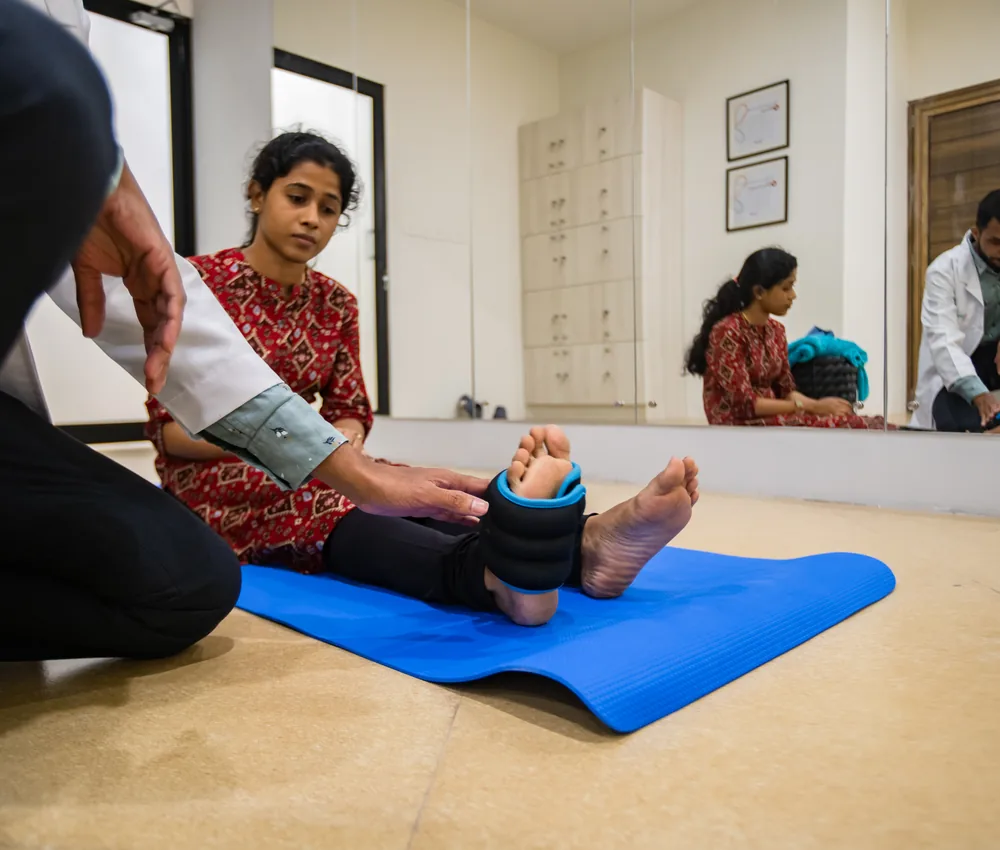
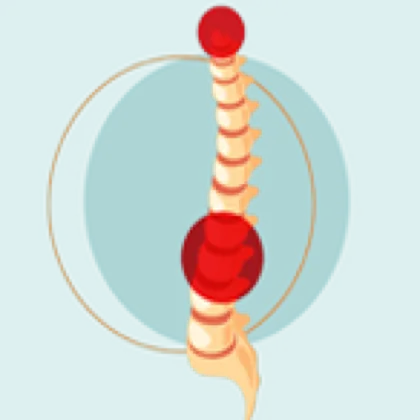
What is lower back pain?
Lower back pain is pain, stiffness or muscle tension between the bottom of your ribs and the top of your legs. It may stay in your back or spread into your buttocks or legs.
Doctors and physiotherapists usually describe it by how long it has lasted:
- Acute: a recent episode, lasting up to around six weeks
- Subacute: lasting between about six and twelve weeks
- Chronic: lasting more than about three months, or coming back again and again
Common symptoms
- A dull ache or stiffness across the lower back
- Sharp pain when you bend, lift, twist or get up from sitting
- Pain that's worse after sitting for long periods, or first thing in the morning
- Muscle spasm or tightness
- Pain spreading into your buttock or down the back of your leg, sometimes with numbness or tingling. When pain travels below the knee, it's often a sign of an irritated nerve, known as sciatica.
What causes lower back pain?
In most people, lower back pain doesn't come from a single structure that can be pointed to on a scan. This is often called non-specific low back pain. It's usually linked to the muscles, joints and ligaments of the back and how they cope with everyday loads.
Specific causes include:
- Muscle or ligament strain, often after lifting, a sudden movement or an unusual activity
- Disc bulge or slipped (herniated) disc, where a disc presses on nearby nerves
- Degenerative disc disease and lumbar spondylosis: age-related changes in the discs and joints
- Facet joint pain: irritation of the small joints at the back of the spine
- Sacroiliac joint pain, where the spine meets the pelvis
- Lumbar spinal stenosis: narrowing of the spinal canal, often causing leg pain when walking
- Spondylolisthesis: one vertebra slipping forward on the one below
Things that can make back pain more likely or harder to shift include long hours of sitting, long commutes, heavy or repetitive lifting, low physical activity, poor sleep and stress.
When back pain needs urgent medical care
Most back pain isn't dangerous. But go to a hospital emergency department straight away if back pain comes with:
- numbness around your genitals or bottom
- new difficulty controlling your bladder or bowels
- leg weakness that's getting worse
- back pain after a serious fall or accident
See a doctor urgently if you also have fever, unexplained weight loss, a history of cancer, or pain at night that stops you sleeping.
How lower back pain is diagnosed
A good diagnosis starts with a conversation and a physical examination, not a scan. At your Maana Spine assessment, your physiotherapist asks about your symptoms and history, checks how your back moves, and tests your nerves, strength and reflexes.
Scans aren't always needed. An MRI or X-ray can be useful when nerve symptoms, red flags or a lack of progress suggest something specific. Scans also don't always explain pain: changes such as disc bulges are often seen in people who have no pain at all. That's why your scans are always interpreted alongside how your body actually moves. If you need a scan, your physiotherapist will recommend one and explain why.
How we treat lower back pain at Maana Spine
Lower back pain is treated through Maana Spine DTX™, our personalised, non-surgical Precision Spine Care program. Your plan depends on what your assessment finds.
 Assess: we work out what's driving your pain, rule out red flags, and agree a plan with you.
 Decompress: if your pain is linked to a disc, such as a disc bulge or herniation, especially with leg pain, computer-controlled spinal decompression may be part of your plan. If your pain isn't disc-related, or decompression isn't suitable for you, we use other therapies instead.
 Restore: mobility, movement, posture and physiotherapist-led stretching.
 Strengthen: a structured Level 1 to Level 4 exercise progression to build the strength and stability that support your back.
 Empower: practical guidance on sitting, lifting, work set-up, sleep and staying active, so you know how to manage your back yourself.
 Maintain: in-person follow-up at 1, 3, 6 and 12 months after your program ends. The 1- and 3-month follow-ups are included in your program fee; the 6- and 12-month reviews are charged separately.
A DTX program is typically 15 to 25 sessions of 60 to 75 minutes each, depending on your condition.
What the research and guidelines say
Exercise is the foundation. Clinical guidelines consistently put exercise, staying active and self-management at the centre of care for low back pain. The UK's National Institute for Health and Care Excellence (NICE), for example, recommends exercise programmes and advises that hands-on treatments such as spinal mobilisation or massage should only be used as part of a package that includes exercise. Exercise and rehabilitation make up most of every DTX program.
Spinal decompression: what trials show. A 2022 sham-controlled trial found that decompression reduced leg pain and herniated disc size in people with a recent disc herniation, and other trials have found benefits when decompression is added to physiotherapy. Results are mixed outside disc herniation with leg pain: a 2009 sham-controlled trial in people with chronic low back pain without leg pain found no added benefit.
What this means for you: if your lower back pain is linked to a disc problem with leg pain, decompression may be part of your plan, always combined with rehabilitation. If your pain isn't disc-related, your program will focus on exercise, movement and the other therapies that suit you.
Looking after your back
These general tips help many people with everyday back pain. They're not a substitute for an assessment if your pain is severe, persistent or worrying.
- Keep moving. Gentle activity and continuing your normal routine as far as you can usually helps more than resting in bed.
- Break up long sitting. Stand up and move regularly if you work at a desk. → Desk job back pain: what helps
- Lift with care. Keep loads close to your body and avoid twisting while lifting.
- Build strength gradually. Regular exercise that you enjoy, such as walking, swimming or a structured programme, helps protect your back over time.
When to book a spine assessment
Book an assessment if your back pain:
- has lasted more than two weeks, or keeps coming back
- is spreading into your buttock or leg
- comes with numbness, tingling or weakness
- stops you working, sleeping or doing everyday activities
Spine assessments are available at all five Maana Spine clinics in Kochi, Kozhikode, Thiruvananthapuram, Aluva and Perinthalmanna. The consultation fee is ₹250, and no doctor's referral is needed.
Book a Spine Assessment · or call +91 99950 09403
What patients say
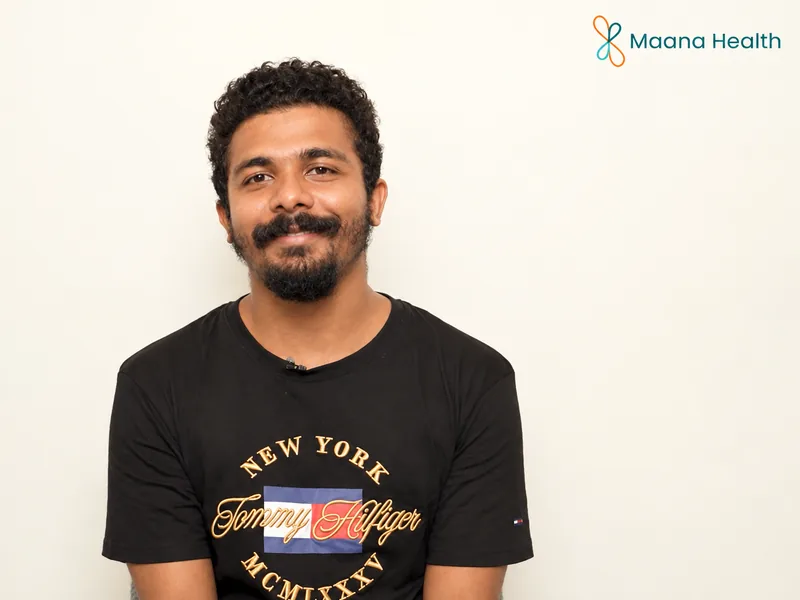
I was suffering from lower back pain that radiated down my leg. The treatment I received at Maana Health was very effective. The therapies and excellent care helped reduce my pain and made it easier for me to return to my normal daily activities.
Steven B.Spondylolisthesis
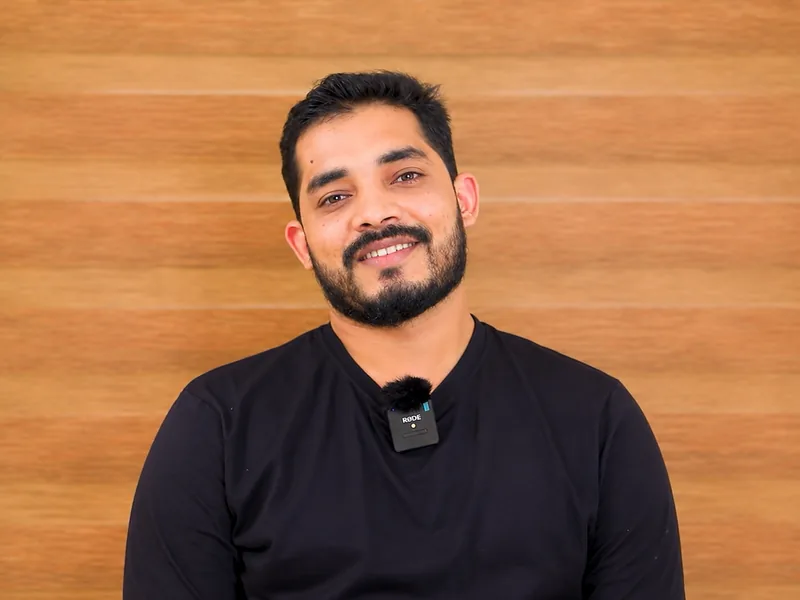
I was struggling with lower back pain that radiated down my leg, which made even daily activities difficult. The therapies and the care from the doctors and therapists at Maana Health helped me manage the pain and get back to my normal routine. I would definitely recommend Maana Health to anyone looking for non-surgical treatment options for back pain.
Ashraf T.M.Lumbar disc bulge

I was in severe pain and received treatment at Maana Health. The proper treatment and therapies here helped reduce my pain significantly and improved my condition. I would recommend Maana Health to anyone looking for non-surgical treatment options for spine-related problems.
SimiDisc bulge
Shared with each patient's written consent. These are individual experiences; results vary.
Frequently asked questions
Is lower back pain serious?
Usually not. Most lower back pain is not caused by anything dangerous and improves with time and the right care. A small number of symptoms, such as numbness around the genitals, loss of bladder or bowel control, or worsening leg weakness, need urgent medical attention.
How long does lower back pain take to get better?
Many episodes improve within a few weeks. Pain that lasts more than about three months is described as chronic, and usually needs a structured plan focusing on exercise, movement and understanding what's driving it.
Do I need an MRI for lower back pain?
Not always. Many people with back pain don't need a scan. An MRI may be useful if you have nerve symptoms, red flags, or pain that isn't improving. Your physiotherapist will recommend one if it's needed.
Is spinal decompression good for lower back pain?
It depends on the cause. Decompression has the strongest evidence for disc herniation with leg pain, and is always combined with rehabilitation at Maana Spine. For back pain that isn't disc-related, other treatments are usually a better fit. Your assessment decides which approach suits you.
Should I rest if my back hurts?
Gentle activity is usually better than bed rest. Keep moving within your comfort, and get assessed if the pain is severe, spreading into your leg, or not improving.
Can lower back pain come back?
Yes, it often does, which is why DTX includes strengthening, guidance on everyday movement, and follow-up at 1, 3, 6 and 12 months to help you keep your progress.
Do I need to see a doctor or a physiotherapist?
For most lower back pain, a physiotherapist is a good place to start, and you don't need a referral to book with us. If your assessment suggests you need a doctor, further tests or a surgical opinion, we'll tell you clearly.
How much does treatment cost?
The spine assessment consultation fee is ₹250. Treatment fees depend on your personalised plan and are worked out after your assessment.
References
- National Institute for Health and Care Excellence (NICE). Low back pain and sciatica in over 16s: assessment and management (NG59). Published 2016, last updated July 2026. nice.org.uk/guidance/ng59/chapter/recommendations
- NICE. Low back pain and sciatica: information for the public (exercise and physical activity). nice.org.uk/guidance/ng59/ifp/chapter/Exercise-and-physical-activity
- Choi E, et al. Effect of nonsurgical spinal decompression on intensity of pain and herniated disc volume in subacute lumbar herniated disc. International Journal of Clinical Practice, 2022. doi.org/10.1155/2022/6343837
- Schimmel JJP, et al. No effect of traction in patients with low back pain: a single centre, single blind, randomized controlled trial of Intervertebral Differential Dynamics Therapy. European Spine Journal, 2009. link.springer.com/article/10.1007/s00586-009-1044-3
- Brinjikji W, et al. Systematic literature review of imaging features of spinal degeneration in asymptomatic populations. American Journal of Neuroradiology, 2015;36(4):811–816. doi.org/10.3174/ajnr.A4173