
Written by Ansu Susan Kuriakose, BPT · Clinically reviewed by Jasmal K, BPT, MPT · Last reviewed 5 October 2026
Pulsed signal therapy (PST): what the research shows
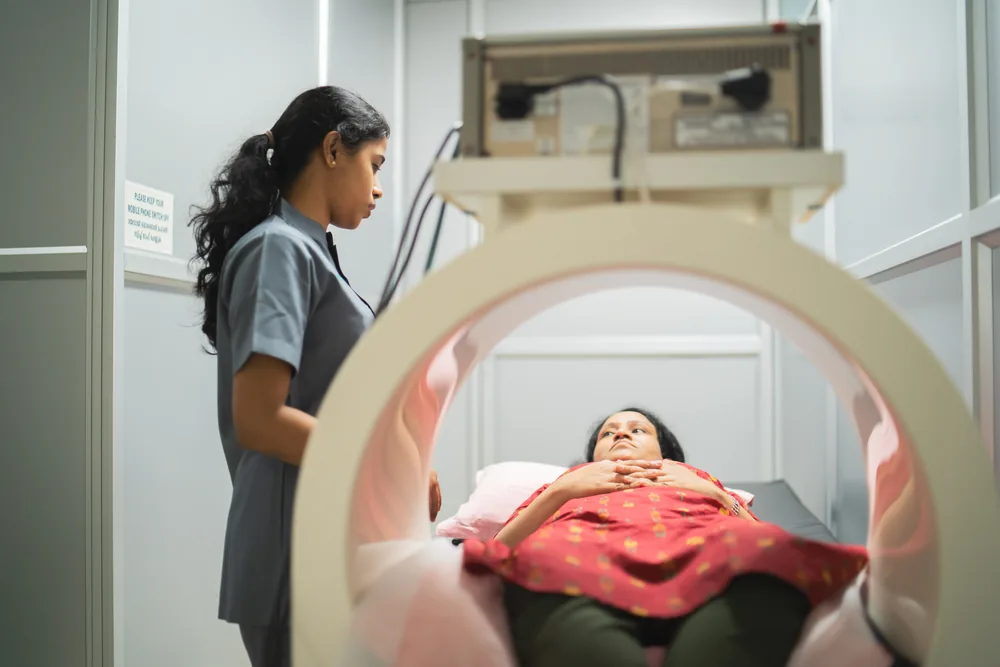
Pulsed signal therapy (PST) is one of the treatments we use within Maana Spine DTX™, particularly when spinal decompression doesn't suit your condition. This page explains what PST is, how we use it, and what research does and doesn't show.
The short version
- PST is a type of pulsed electromagnetic field (PEMF) therapy. It's non-invasive and CE-marked.
- Reviews of PEMF for long-lasting low back pain found less pain than placebo or other treatments alone, but no clear improvement in physical function.
- Most of that research used other PEMF devices, not PST specifically.
- PST-related trials are mainly in osteoarthritis of the knee and neck. They're small and old.
- We use PST as one part of a program built around exercise, not on its own.
What PST is
PST uses pulsed electromagnetic fields applied to the treated area. It's non-invasive and is CE-marked.
How we use PST at Maana Spine
PST is used within Maana Spine DTX™:
- when spinal decompression doesn't suit your condition, so you can still follow the full DTX program
- for some people with spondylolisthesis (a slipped vertebra): for a grade 1 slip, decompression may be used depending on your symptoms and stage; otherwise, your physiotherapist may use PST instead
It's always combined with exercise-based rehabilitation through our four-level roadmap. Your physiotherapist checks whether PST is suitable for you before using it.
What the studies found
Low back pain (meta-analysis, 2022). PEMF reduced low back pain more than placebo or other treatments alone. The benefit was significant for long-lasting (chronic) low back pain, but not for recent (acute) low back pain. PEMF did not improve physical function compared with control treatments.
Non-specific low back pain (systematic review). A review of 9 randomised trials found PEMF appeared to help pain and function, particularly when added to other physiotherapy treatments, and appeared safe. The trials were small and used different devices.
An earlier review (2016) concluded that small, varied trials didn't allow strong recommendations.
Osteoarthritis of the knee and neck (Trock and colleagues, 1993 and 1994). In randomised, double-blind, placebo-controlled trials, people treated with PEMF improved more than those given placebo on most measures. In the neck group, the difference was statistically significant at one or more time points for pain, pain on movement and tenderness. Follow-up lasted only one month after treatment.
These trials have important limits: they're small and old, the 1994 trial's groups weren't fully comparable at the start, and a co-author, Richard Markoll, developed PST. They studied osteoarthritis, not disc or ligament problems.
How we read the evidence
There's reasonable evidence that PEMF therapy can reduce long-lasting low back pain, especially alongside physiotherapy, but less evidence that it improves day-to-day function. Research on PST specifically is limited, and most of it is in osteoarthritis.
We haven't found trials showing that PST repairs or regenerates cartilage, ligaments or facet joints, and we don't make that claim.
That's why PST is one part of a wider plan. Lasting improvement depends on exercise and changes to daily habits.
What we don't know yet
- How PST compares with other PEMF devices
- Whether PST improves function, not just pain
- How long any benefit lasts
- How well it works for specific spine conditions, such as disc problems or spondylolisthesis
Is PST right for you?
Your physiotherapist will decide at your spine assessment whether PST suits your condition, as part of your DTX plan. Spine assessments are available at all five Maana Spine clinics in Kochi, Kozhikode, Thiruvananthapuram, Aluva and Perinthalmanna. The consultation fee is ₹250, and no doctor's referral is needed.
Book a Spine Assessment · or call or WhatsApp +91 99950 09403
References
- Sun X, Huang L, Wang L, et al. Efficacy of pulsed electromagnetic field on pain and physical function in patients with low back pain: a systematic review and meta-analysis. Clinical Rehabilitation, 2022;36(5):636–649. pubmed.ncbi.nlm.nih.gov/35077249
- Kull P, Keilani M, Remer F, Crevenna R. Efficacy of pulsed electromagnetic field therapy on pain and physical function in patients with non-specific low back pain: a systematic review. Wiener Medizinische Wochenschrift. pmc.ncbi.nlm.nih.gov/articles/PMC11775040
- Porto Biomedical Journal, 2016. doi.org/10.1016/j.pbj.2016.09.001
- Trock DH, Bollet AJ, Markoll R. The effect of pulsed electromagnetic fields in the treatment of osteoarthritis of the knee and cervical spine: report of randomized, double blind, placebo controlled trials. Journal of Rheumatology, 1994;21(10):1903–1911. search.pedro.org.au
- Trock DH, et al. A double-blind trial of the clinical effects of pulsed electromagnetic fields in osteoarthritis. Journal of Rheumatology, 1993;20(3):456–460. pubmed.ncbi.nlm.nih.gov/8478852