
Written by Ansu Susan Kuriakose, BPT · Clinically reviewed by Jasmal K, BPT, MPT · Last reviewed 5 October 2026
Maana Spine DTX™: Precision Spine Care
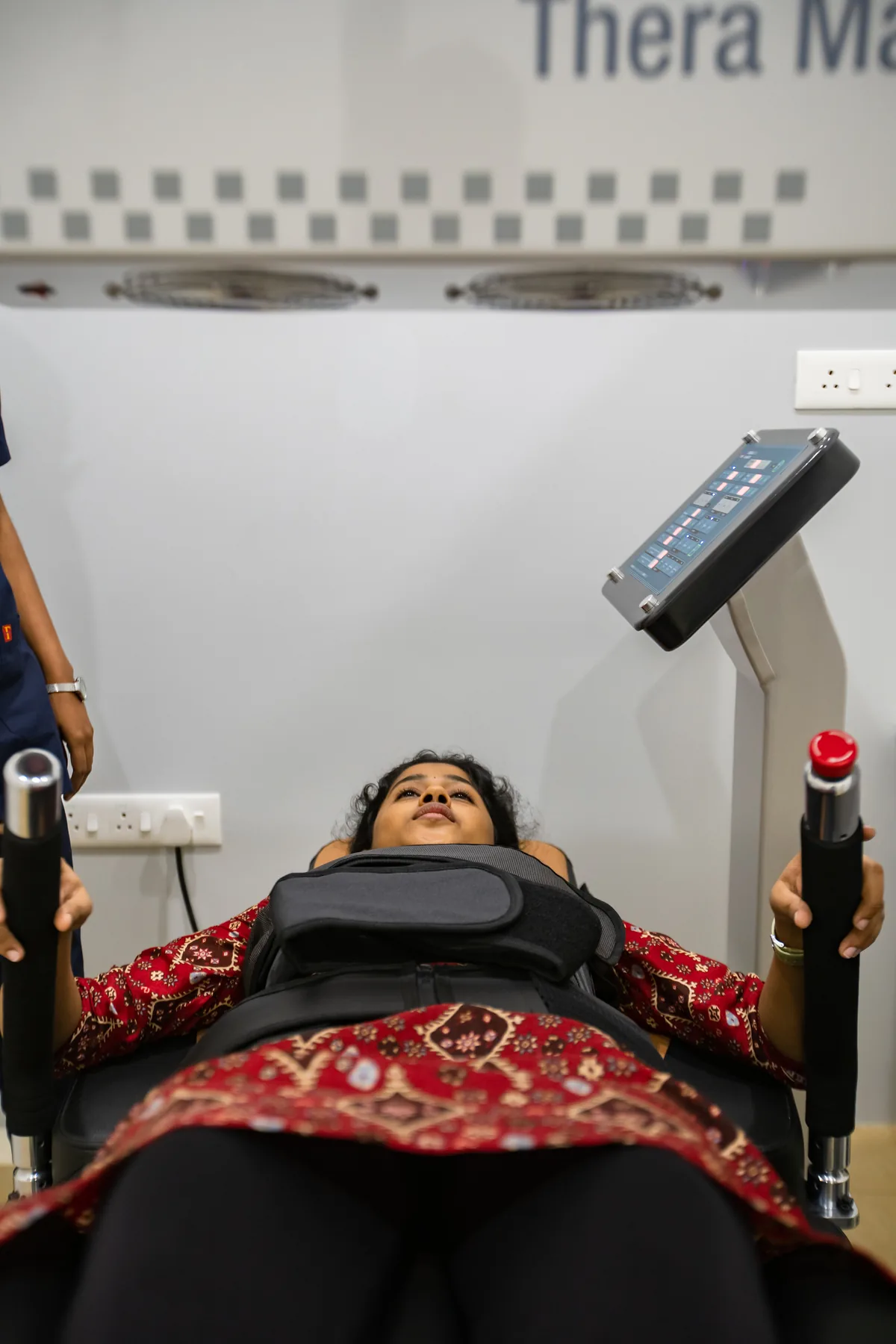
A personalised, non-surgical approach to back and neck pain.
Back and neck pain rarely stays in one place. It changes how you sit, sleep, work and move. Treating only the pain can leave the cause untouched, which is often why it comes back.
Maana Spine DTX™ is a structured program built around your spine. It combines computer-controlled spinal decompression (where it suits your condition) with physiotherapy-led rehabilitation, posture and ergonomic guidance, and follow-up for a full year after your treatment ends.
Your spine is unique. Your treatment should be too.
Book a Spine Assessment · or call +91 99950 09403
More than a treatment session
Most people think of spine care as a simple line: pain, treatment, better. DTX is a longer journey. You'll understand what's causing your pain, receive treatment matched to it, rebuild strength and movement, and learn how to protect your spine in everyday life.
Treat the cause. Not just the pain.
The six stages of DTX

1. Assess
Your physiotherapist starts by understanding your symptoms, your history, how the pain affects your daily life, and how your spine moves. This assessment decides your treatment plan, including whether spinal decompression is right for you at all.

2. Decompress
If decompression suits your condition, you'll receive computer-controlled spinal decompression. Force, positioning and stabilisation are set for your condition and the affected level of your spine. If decompression isn't suitable, your physiotherapist will use other therapies instead (see "Therapies used within DTX" below).

3. Restore
Next, the focus moves to mobility, movement patterns, posture and physiotherapist-led stretching, restoring movement that pain may have limited.

4. Strengthen
You progress through a structured four-level rehabilitation roadmap, building the strength and stability that support your spine.

5. Empower
You'll learn how to manage posture, ergonomics, movement and exercise at work and at home. Knowing how to look after your spine is part of the treatment.

6. Maintain
After your sessions end, we follow up in person at 1, 3, 6 and 12 months to review your progress and help you keep it. Follow-ups at 1 and 3 months are included in your program fee; the 6- and 12-month reviews are charged separately.
What a DTX program looks like in practice
- Program length: 15 to 25 sessions, depending on your condition and assessment.
- Session length: 60 to 75 minutes per session.
- Setting: Outpatient care at the clinic. No hospital admission and no incisions.
- Your care team: You'll typically be treated by the same physiotherapist throughout, with oversight from the senior physiotherapist at your clinic.
The technology
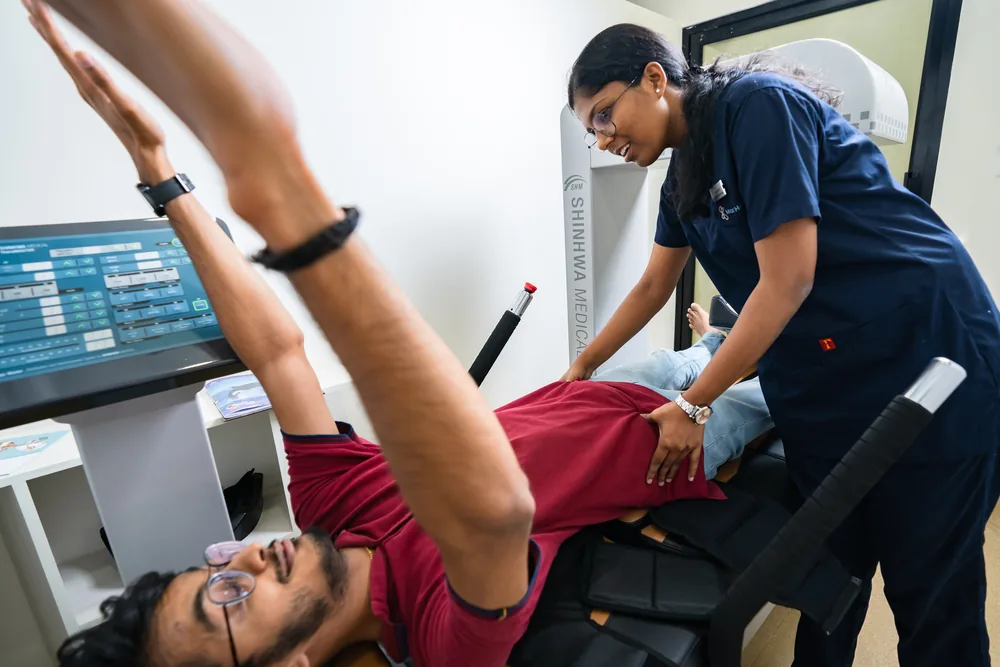
DTX uses US FDA 510(k)-cleared spinal decompression technology. It allows your physiotherapist to customise:
- Computer-controlled, variable traction force
- 3D positioning
- Pelvic and lateral stabilisation
- Condition-specific and disc-level-specific settings
- Cervical (neck) positioning
The equipment matters, but DTX is bigger than the machine. Decompression is one stage of a program, not the whole program.
How non-surgical spinal decompression works, and how it differs from traction
Therapies used within DTX
Depending on your assessment, your plan may also include:
- ESWT (radial shockwave therapy): acoustic pressure waves applied to tight, painful muscle trigger points, often in the neck and upper back.
- PST (pulsed signal therapy): a non-invasive, CE-marked pulsed electromagnetic field therapy, often used when decompression isn't suitable. → The PST evidence
- Hands-on (manual) therapy: used where appropriate, as part of your rehabilitation.
- Physiotherapist-led stretching: targeted stretching guided by your physiotherapist based on your assessment. This is clinical care, not a spa-style stretch session.
- Physiotherapy and exercise therapy: the foundation of the Restore, Strengthen and Maintain stages.
The 4-level rehabilitation roadmap
- Level 1, Restore: gentle movement, mobility and muscle activation, adjusted to your symptoms.
- Level 2, Stabilise: posture, core control, spinal stability and movement quality.
- Level 3, Strengthen: progressive strengthening and functional conditioning.
- Level 4, Maintain: exercise, mobility and self-management you continue long term.
From treatment to strength.
Care that continues beyond treatment
- 1 monthEarly progress and how you're adapting
- 3 monthsFunctional progress and your exercise routine
- 6 monthsLonger-term maintenance and lifestyle habits
- 12 monthsLong-term progress and any ongoing spine-care needs
What the research says
Research on non-surgical spinal decompression is still developing, and many studies are small. But the evidence is growing. In a randomised trial comparing real decompression with a sham treatment, people with a recently herniated disc had less leg pain, better day-to-day function and a greater reduction in disc herniation size on MRI. Other studies have found that decompression combined with physiotherapy works better than physiotherapy alone.
DTX is built on that model. Decompression, where appropriate, is always part of a wider rehabilitation program.
Where DTX fits alongside surgery
For most people with disc-related back or neck pain, a structured non-surgical program is a reasonable first step, and many people improve without an operation. Surgery still has an important place. It can be the right choice for severe or worsening nerve symptoms, or when non-surgical care hasn't helped enough. For some conditions, such as lumbar spinal stenosis, research reviews have not found surgery to be clearly better than non-surgical care, and surgery carries its own risks.
DTX is designed as a non-surgical first option. If your progress isn't what it should be, your physiotherapist will tell you honestly and help you decide whether to see a spine surgeon. Choosing DTX first doesn't close that door.
Is DTX right for you?
DTX is designed for spine-related conditions, including:
- Lower back pain and neck pain
- Sciatica
- Herniated (slipped) disc and bulging disc
- Cervical and lumbar spondylosis
- Nerve-related symptoms linked to the spine, such as arm or leg pain and tingling
For some conditions, including certain stages of osteoporosis and spondylolisthesis, and during pregnancy, your physiotherapist may decide against decompression and build your program around other therapies. That decision is made at your assessment, never assumed in advance.
Recent or sudden pain?
DTX isn't only for pain you've lived with for years. Over the past five years, we've also treated patients with recent, sudden (acute) episodes of back and neck pain.
With acute pain, your assessment first checks for warning signs that need urgent medical care. If a non-surgical program is appropriate, we start by managing your pain. Once your symptoms settle, we move on to spinal decompression and the rest of the program. The overall program length is similar, typically 15 to 25 sessions.
Research supports treating recent disc problems too. In a randomised trial, people with a recently herniated lower-back disc who received decompression had less leg pain and better function than those who received a sham treatment.
When to seek urgent care instead
Some symptoms need emergency medical attention, not physiotherapy. These include loss of bladder or bowel control, numbness around the groin, or rapidly worsening leg weakness.
Know the red flags
Experience you can measure
- 5+ yearsof clinical experience with our spine-care protocol
- 2,700+spine patients treated across our clinics since 2021
- 96%+patient satisfaction
Satisfaction is based on 800+ ratings from Maana spine patients on Google reviews and Maana's patient satisfaction forms between 2021 and 2026. "Satisfied" means a rating of 4 or 5 out of 5.
Find a Maana Spine clinic
DTX is available at all five Maana Spine, Joint & Wellness Clinics:
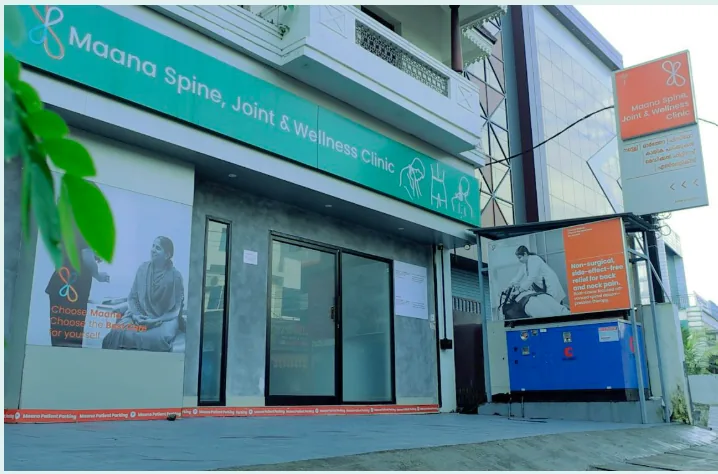 Maana Spine, Joint & Wellness ClinicKochi (Kaloor)Kaloor
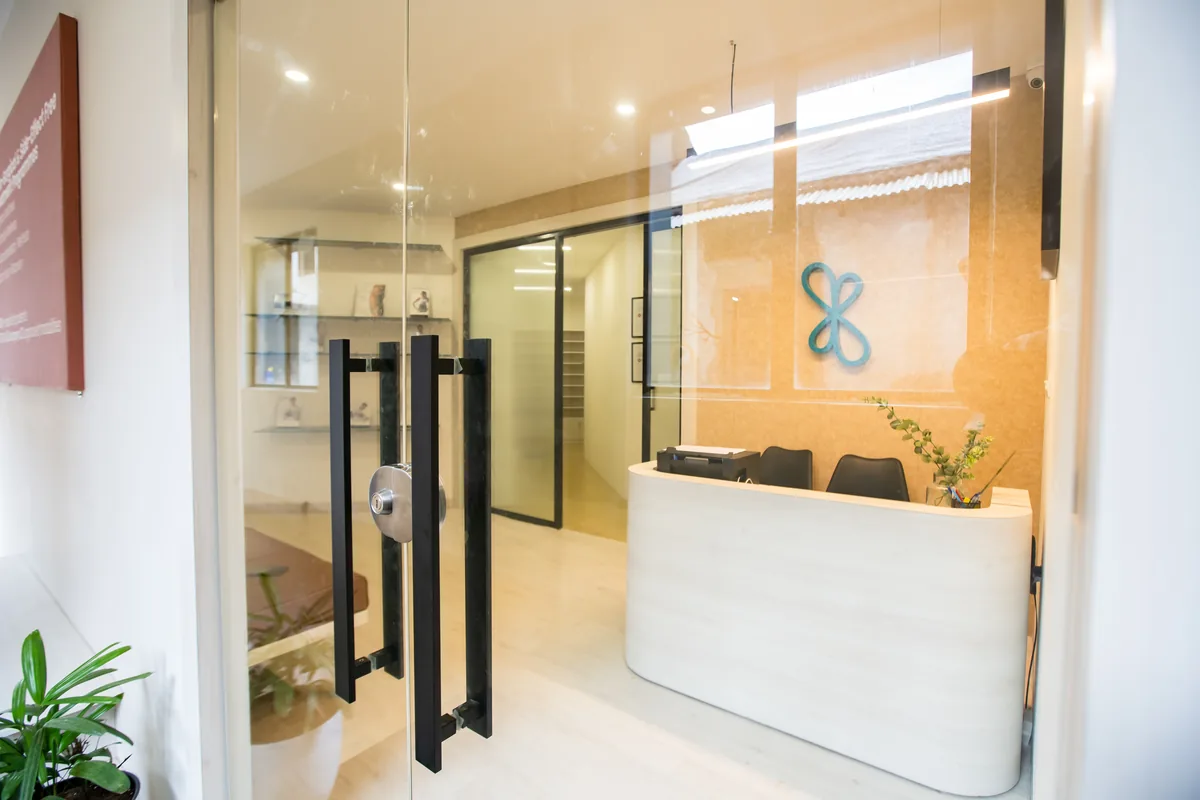 Maana Spine, Joint & Wellness ClinicKozhikode (Eranhipaalam)Eranhipaalam, near Civil Station
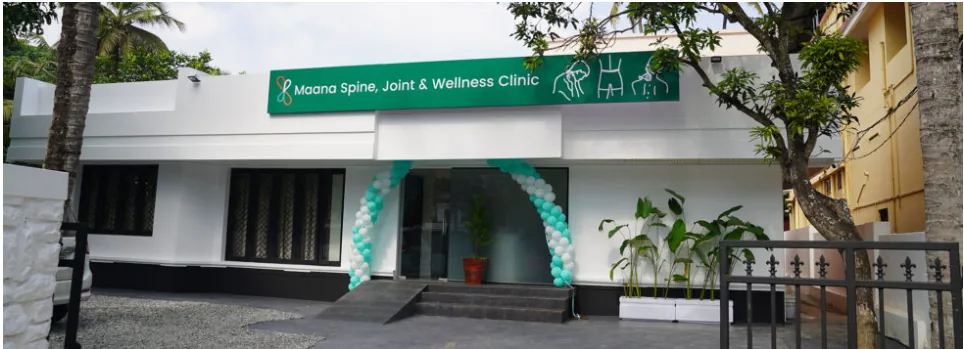 Maana Spine, Joint & Wellness ClinicThiruvananthapuram (Peroorkada)Peroorkada
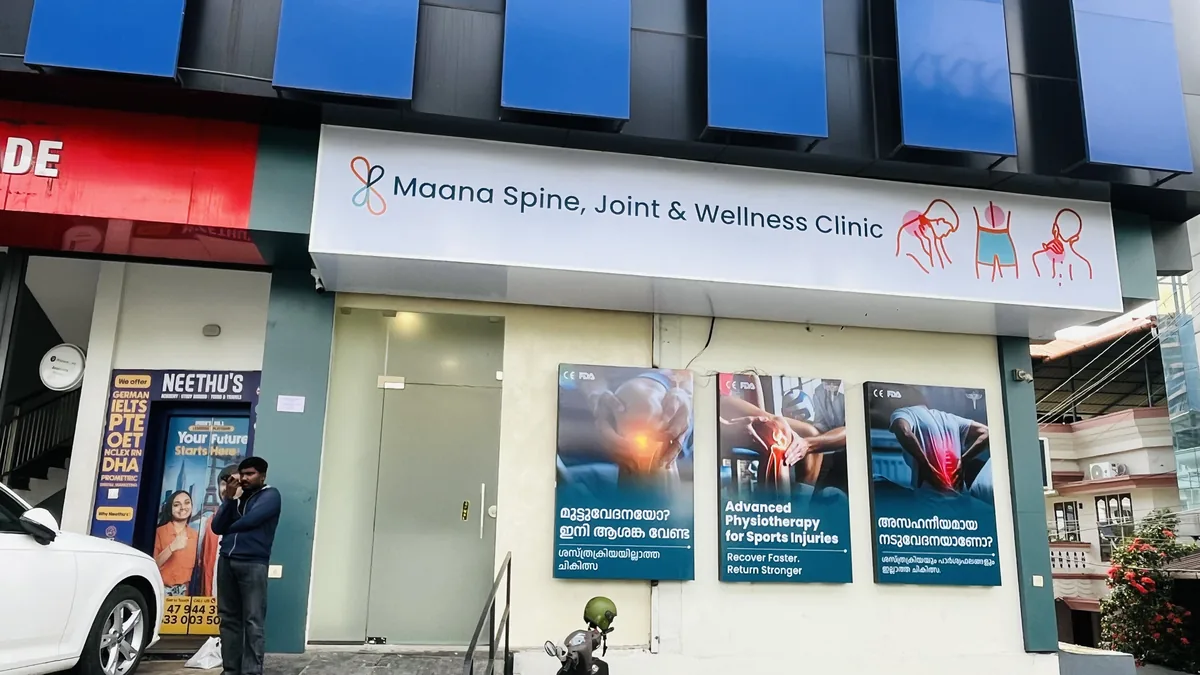 Maana Spine, Joint & Wellness ClinicAluvanear Pulinchud Metro Station
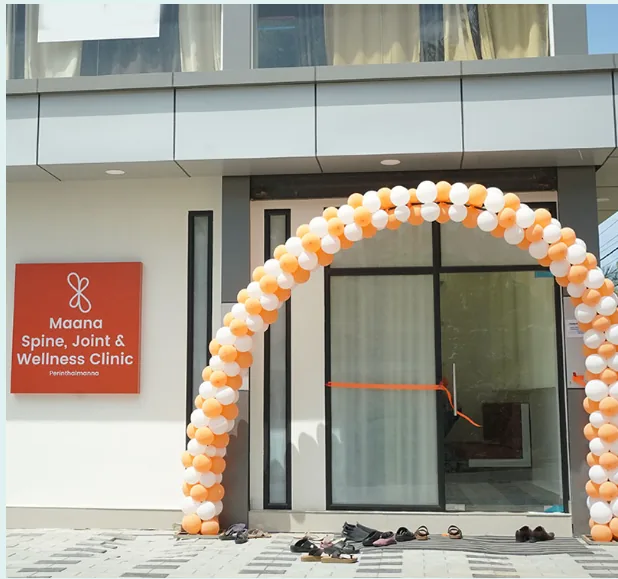 Maana Spine, Joint & Wellness ClinicPerinthalmannaJubilee Road
Clinic hours: Monday to Saturday 8:30 AM–7 PM. Sunday 9 AM–3 PM.
Book a Spine Assessment · or call +91 99950 09403
Frequently asked questions
What is Maana Spine DTX™?
Maana Spine DTX™ is a personalised, non-surgical spine care program. It combines computer-controlled spinal decompression (where suitable) with physiotherapy-led rehabilitation, posture and ergonomic guidance, and structured follow-up at 1, 3, 6 and 12 months.
Is DTX a surgical treatment?
No. DTX is entirely non-surgical and delivered as outpatient sessions at the clinic. There are no incisions and no hospital admission.
How many sessions will I need?
A DTX program is typically 15 to 25 sessions, depending on your condition and assessment. Each session lasts 60 to 75 minutes.
Does every patient receive spinal decompression?
No. Your physiotherapist decides at your assessment whether decompression is suitable. If it isn't, your program uses other therapies, such as shockwave therapy (ESWT), pulsed signal therapy (PST), physiotherapist-led stretching and exercise therapy.
Who will treat me?
You'll typically work with the same physiotherapist throughout your program, with oversight from the senior physiotherapist at your clinic.
What happens after my sessions end?
We schedule in-person follow-ups at 1, 3, 6 and 12 months to review your progress, check your exercise routine and help you maintain your results. The 1- and 3-month follow-ups are included in your program fee; the 6- and 12-month reviews are charged separately.
Is DTX better than surgery?
They serve different purposes. DTX is a non-surgical program that many people with disc-related pain try first. Surgery may be the right choice for severe or worsening nerve symptoms, or when non-surgical care hasn't helped enough. If DTX isn't working for you, your physiotherapist will discuss whether you should see a spine surgeon.
Can DTX guarantee I won't need surgery?
No treatment can guarantee that. Many people with back and neck pain improve without surgery. Your assessment helps identify whether a non-surgical program is appropriate for you, or whether you should see a spine specialist.
Can DTX help with sudden, recent back or neck pain?
Yes, in many cases. Your assessment first rules out warning signs that need urgent medical care. We then focus on easing your pain, and once your symptoms settle, you move on to spinal decompression and rehabilitation. The program is usually a similar length, 15 to 25 sessions.
Where is DTX available?
At all five Maana Spine, Joint & Wellness Clinics: Kochi, Kozhikode, Thiruvananthapuram, Aluva and Perinthalmanna.
How do I start?
Book a Spine Assessment online or call +91 99950 09403. Clinics are open Monday to Saturday 8:30 AM–7 PM, and Sunday 9 AM–3 PM.