
Written by Ansu Susan Kuriakose, BPT · Clinically reviewed by Jasmal K, BPT, MPT · Last reviewed 5 October 2026
Physiotherapy, chiropractic or Ayurveda for back pain: what the evidence says
In Kerala, people with back pain have many choices: physiotherapy, chiropractic, Ayurveda, and often a mix. This guide describes each approach fairly, summarises what research shows, and suggests questions to ask whoever you see.
A note on where we stand: Maana Spine is a physiotherapy clinic. We don't provide chiropractic or Ayurvedic treatment. We've tried to describe each approach accurately and to report the evidence, including its limits, for all three.
Book a Spine Assessment · or call or WhatsApp +91 99950 09403
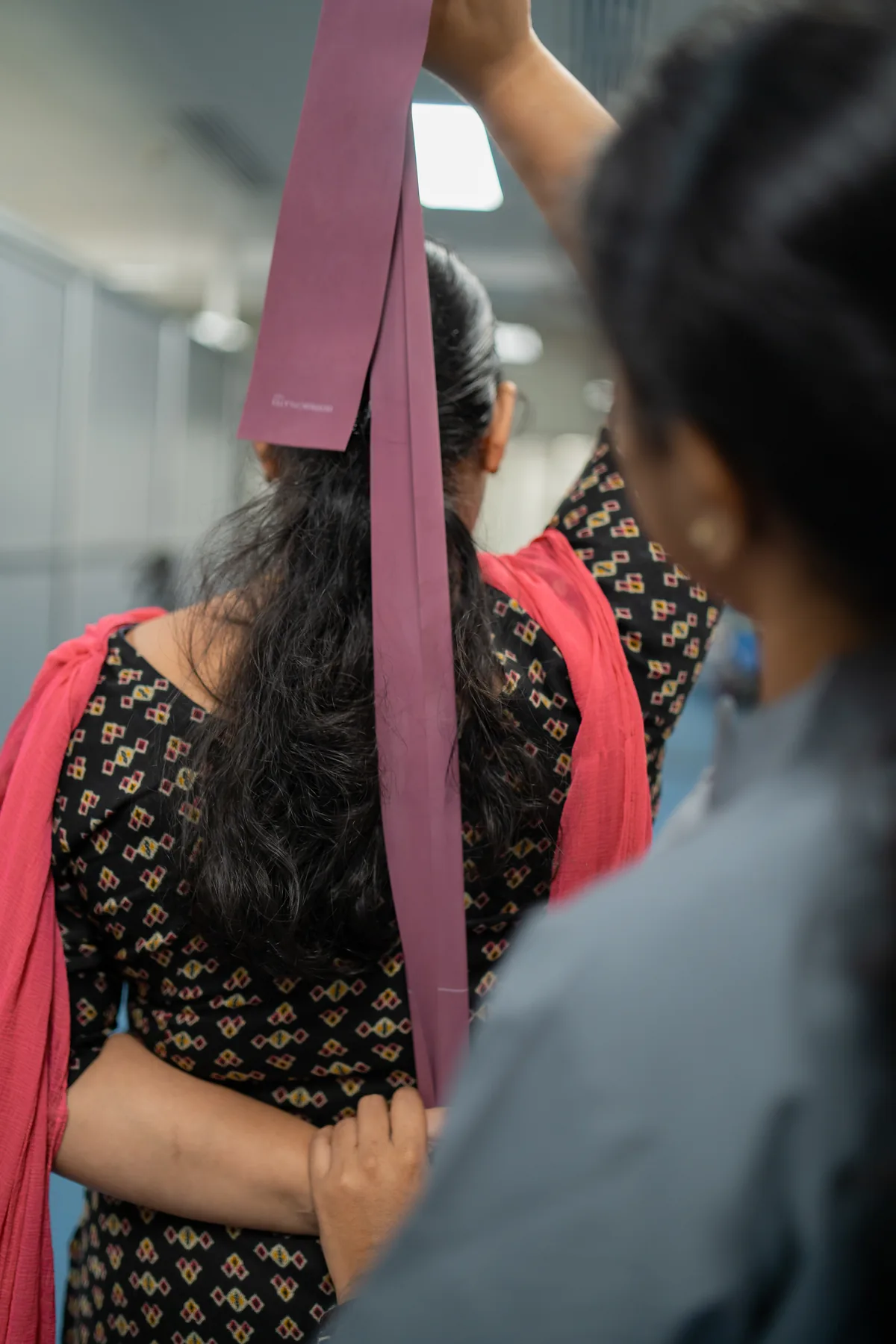
Physiotherapy
What it involves. Physiotherapists assess how your spine moves and how your muscles, joints and nerves are working. Treatment centres on exercise, often combined with hands-on (manual) therapy, education, and other physical treatments.
What research shows.
- A 2021 Cochrane review found moderate-certainty evidence that exercise probably reduces long-lasting low back pain by an amount that makes a real difference to patients.
- The UK's NICE guideline recommends exercise programmes for low back pain, with hands-on treatment only as part of a package that includes exercise.
- A 2016 review found exercise, especially with education, reduced the risk of a new episode of back pain.
Limits. Exercise takes time and regular effort. Benefits fade if you stop.
Chiropractic
What it involves. Chiropractors focus on the spine and commonly use spinal manipulation (quick, controlled movements of a joint) and mobilisation. Many also give exercise and advice. Physiotherapists and osteopaths may also use manipulation.
What research shows.
- A 2019 review of trials in chronic low back pain found spinal manipulation produced similar effects to other recommended treatments, such as exercise (moderate-quality evidence), and appeared better than non-recommended treatments for short-term function.
- NICE recommends manipulation only as part of a package of care that includes exercise.
Limits and risks. Evidence comparing manipulation with sham treatment is low quality. Neck manipulation has been associated with a rare but serious injury to an artery in the neck, whoever performs it, so anyone offering it should screen for warning signs first.
Ayurveda
What it involves. Ayurveda is a traditional system of medicine widely practised in Kerala. Back pain treatment may include oil massage and external therapies (such as kati basti), herbal medicines, diet and lifestyle advice, and yoga.
What research shows.
- Research on Ayurveda for back pain is limited, and most studies are small.
- In one randomised trial of 64 people with chronic low back pain, Ayurvedic massage and external treatment reduced pain more than local heat therapy in the short term. Participants and therapists knew which treatment was given.
- A 2024 review noted that side effects of AYUSH treatments (including Ayurveda) for neck and back spondylosis have been poorly documented in research.
Limits. There's too little high-quality research to compare Ayurveda reliably with physiotherapy or chiropractic.
So which should you choose?
There's no single answer for everyone. Some practical points:
- Look for exercise. Whatever you choose, research consistently supports active exercise as part of care for long-lasting back pain.
- Watch for warning signs. Any practitioner should check for symptoms that need a doctor.
- Be cautious about guarantees. Be wary of anyone promising a permanent cure or that you'll "never need surgery."
- Tell each practitioner about the others. If you combine approaches, including herbal medicines, tell each practitioner and your doctor what you're using.
Questions to ask any practitioner
- What's your qualification, and how are you regulated?
- What do you think is causing my pain?
- What does your treatment involve, and what does research show about it?
- How will we know if it's working, and what happens if it isn't?
- What are the possible side effects?
- When would you suggest I see a doctor?
Physiotherapy at Maana Spine
At Maana Spine, treatment follows Maana Spine DTX™: a personalised, physiotherapist-led program built around exercise, with hands-on (manual) therapy where appropriate and other treatments, such as non-surgical spinal decompression, where they suit your condition. Spine assessments are available at all five Maana Spine clinics in Kochi, Kozhikode, Thiruvananthapuram, Aluva and Perinthalmanna. The consultation fee is ₹250, and no doctor's referral is needed.
Book a Spine Assessment · or call or WhatsApp +91 99950 09403
Frequently asked questions
Is a chiropractor or a physiotherapist better for back pain?
Research suggests spinal manipulation has similar effects to other recommended treatments, such as exercise, for chronic low back pain. Guidelines recommend exercise as central, with hands-on treatment as part of a package. The right choice depends on your condition and preferences.
Does Ayurveda work for back pain?
Research is limited and mostly small. One trial found short-term pain relief from Ayurvedic massage compared with heat therapy. There isn't enough high-quality research to compare it reliably with physiotherapy.
Can I combine Ayurveda and physiotherapy?
Many people do. Tell each practitioner what treatments and medicines you're using, including herbal medicines.
Does Maana Spine offer chiropractic or Ayurveda?
No. Maana Spine is physiotherapist-led. We offer hands-on manual therapy where appropriate, within a physiotherapy program.
Is spinal manipulation safe?
Serious side effects are rare, but neck manipulation has been associated with a rare injury to an artery in the neck. A practitioner should screen for warning signs first.
References
- Hayden JA, Ellis J, Ogilvie R, Malmivaara A, van Tulder MW. Exercise therapy for chronic low back pain. Cochrane Database of Systematic Reviews, 2021. doi.org/10.1002/14651858.CD009790.pub2
- National Institute for Health and Care Excellence (NICE). Low back pain and sciatica in over 16s (NG59). nice.org.uk/guidance/ng59
- Steffens D, Maher CG, Pereira LSM, et al. Prevention of low back pain: a systematic review and meta-analysis. JAMA Internal Medicine, 2016;176(2):199–208. doi.org/10.1001/jamainternmed.2015.7431
- Rubinstein SM, de Zoete A, van Middelkoop M, et al. Benefits and harms of spinal manipulative therapy for the treatment of chronic low back pain: systematic review and meta-analysis of randomised controlled trials. BMJ, 2019;364:l689. doi.org/10.1136/bmj.l689
- Australian Physiotherapy Association. Vertebrobasilar insufficiency and cervical arterial dissection factsheet, 2025. australian.physio
- Kumar S, Rampp T, Kessler C, et al. Effectiveness of Ayurvedic massage (Sahacharadi Taila) in patients with chronic low back pain: a randomized controlled trial. Journal of Alternative and Complementary Medicine, 2017;23(2):109–115. pubmed.ncbi.nlm.nih.gov/27704865
- Ponnaiah M, et al. Adverse events in India's Ayush interventions for cervical and lumbar spondylosis: a systematic review. European Journal of Medical Research, 2024;29. doi.org/10.1186/s40001-024-01985-3