
Written by Ansu Susan Kuriakose, BPT · Clinically reviewed by Jasmal K, BPT, MPT · Last reviewed 5 October 2026
Back spasm and muscle strain: what's happening and how to recover
A back spasm can stop you in your tracks: a sudden, gripping pain, often after bending, lifting or twisting, that makes it hard to stand up straight. It's frightening, but it's usually not serious. Most recent back pain improves a lot within the first few weeks.
Book a Spine Assessment · or call or WhatsApp +91 99950 09403
What is a back spasm or strain?
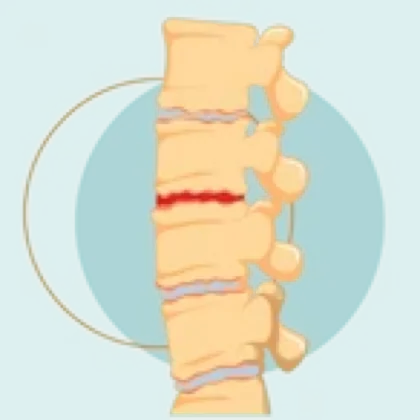
- A strain is an overstretch or small tear in a back muscle or tendon.
- A sprain affects the ligaments that hold the spine's joints together.
- A spasm is a sudden, involuntary tightening of the muscles, often the body's way of protecting an irritated area.
People often call this a "catch," "pulled muscle" or "back went out."
Common triggers include lifting awkwardly, sudden twisting, a fall, or an unusual amount of activity.
Symptoms
- sudden pain in the lower back, sometimes on one side
- muscles that feel tight, hard or knotted
- difficulty standing up straight, bending or turning
- pain that eases with rest in a comfortable position and flares with movement
Pain, numbness or tingling spreading below the knee suggests a nerve may be involved.
Sciatica
When back pain is an emergency
How long does it last?
For most people, the outlook is good. A 2024 review of nearly 18,000 people found that those with recent low back pain improved substantially in pain and day-to-day function within the first 6 weeks. People whose pain had already become persistent improved more slowly, which is why getting help for pain that isn't settling matters.
How it's diagnosed
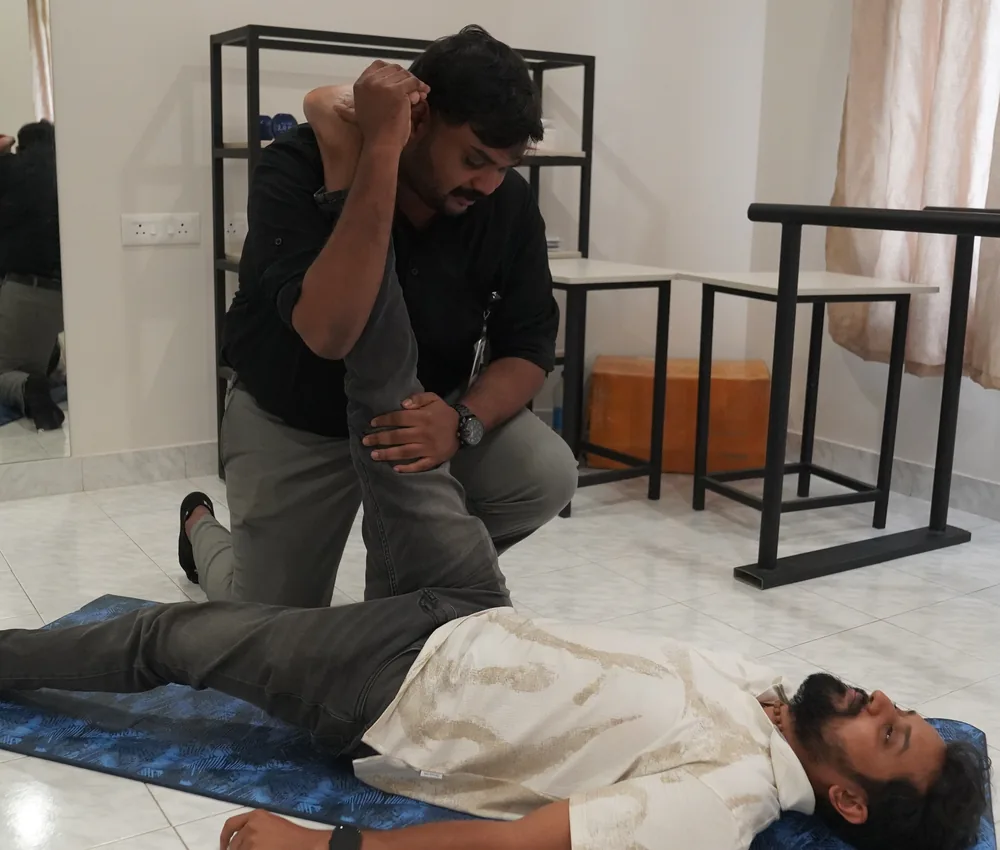
At your Maana Spine assessment, your physiotherapist asks how your pain started, checks how your back moves, tests the nerves in your legs, and screens for warning signs. Scans usually aren't needed for a straightforward strain.
You'll get a physiotherapy diagnosis and a personalised plan. You don't need a scan to book; if one would help, your physiotherapist will recommend an MRI or X-ray.
How we treat back spasm and strain at Maana Spine
Many people with a simple strain recover with good advice and staying active. If your pain is severe, isn't settling, or keeps coming back, treatment follows Maana Spine DTX™:
 Assess: we confirm it's a muscle or joint strain, and rule out nerve involvement and red flags.
 Decompress: not usually needed for a simple muscle strain. If a disc problem is found, decompression may be used where it suits your condition, once severe pain has settled.
 Restore: gentle movement, hands-on treatment, physiotherapist-led stretching, and shockwave therapy (ESWT) for tight, tender trigger points where suitable.
 Strengthen: our four-level exercise roadmap (Level 1 Restore, Level 2 Stabilise, Level 3 Strengthen, Level 4 Maintain) to rebuild strength and help prevent it happening again.
 Empower: how to lift, bend and stay active safely, with written and app-based home exercise programmes.
 Maintain: in-person follow-up at 1, 3, 6 and 12 months. The 1- and 3-month follow-ups are included in your program fee; the 6- and 12-month reviews are charged separately.
A DTX program is typically 15 to 25 sessions of 60 to 75 minutes each. Your physiotherapist will tell you after your assessment how many you're likely to need.
What the research says
Recent back pain usually improves quickly. As above, most people improve substantially within 6 weeks.
Exercise for pain that lasts. For long-lasting low back pain, a 2021 Cochrane review found moderate-certainty evidence that exercise probably reduces pain by an amount that makes a real difference to patients.
Practical tips
- Keep moving gently. Short walks are usually better than lying in bed.
- Find a comfortable position to rest in, then get up and move little and often.
- Try heat on the sore area if it feels soothing.
- Return to normal activities gradually. Avoid heavy lifting until the pain settles.
These are general tips, not a substitute for an assessment.
When to book a spine assessment
Book an assessment if your back pain is severe, hasn't eased after a couple of weeks, keeps coming back, or spreads into your leg. Spine assessments are available at all five Maana Spine clinics in Kochi, Kozhikode, Thiruvananthapuram, Aluva and Perinthalmanna. The consultation fee is ₹250, and no doctor's referral is needed.
Book a Spine Assessment · or call or WhatsApp +91 99950 09403
Frequently asked questions
How long does a back spasm last?
Most recent back pain improves substantially within 6 weeks. Severe spasm often eases within days. Get assessed if it isn't improving.
Should I rest or keep moving?
Keep moving gently. Short walks and gradual return to activity usually help more than bed rest.
Should I use heat or ice?
Many people find heat soothing for muscle spasm. Use whichever feels more comfortable.
Is it a pulled muscle or a slipped disc?
It can be hard to tell. Pain, numbness or tingling below the knee, or leg weakness, suggests a disc or nerve may be involved. An assessment can help.
Why does my back keep going into spasm?
Repeated episodes can be linked to weakness, stiffness or how you lift and move. A structured strengthening programme can help reduce the chances of it happening again.
When should I see a doctor?
Straight away for any emergency signs on this page. Also see a doctor if pain follows a significant fall, comes with fever or unexplained weight loss, or you've had cancer.
References
- Wallwork SB, et al. The clinical course of acute, subacute and persistent low back pain: a systematic review and meta-analysis. CMAJ, 2024;196(2):E29–E46. doi.org/10.1503/cmaj.230542
- Hayden JA, Ellis J, Ogilvie R, Malmivaara A, van Tulder MW. Exercise therapy for chronic low back pain. Cochrane Database of Systematic Reviews, 2021. doi.org/10.1002/14651858.CD009790.pub2
- NHS Lanarkshire. Low back pain pathway. rightdecisions.scot.nhs.uk