
Written by Ansu Susan Kuriakose, BPT · Clinically reviewed by Jasmal K, BPT, MPT · Last reviewed 5 October 2026
Cervical spinal stenosis: narrowing in the neck, and when it needs a doctor
Cervical spinal stenosis means the space for the spinal cord and nerves in your neck has narrowed. For some people it causes neck pain or arm symptoms that can be managed with physiotherapy. For others, it presses on the spinal cord itself, a condition called cervical myelopathy, which needs a doctor's assessment and often surgery.
This page explains the difference, the warning signs to look for, and where Maana Spine can and can't help.
Book a Spine Assessment · or call or WhatsApp +91 99950 09403
What is cervical spinal stenosis?
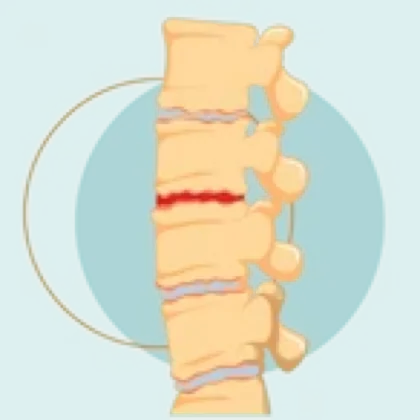
Your spinal cord runs through a canal in your neck bones, and nerve roots branch off through small openings on each side. In cervical stenosis, this space narrows, usually because of age-related changes (cervical spondylosis) such as bulging discs, bone spurs and thickened ligaments.
Narrowing can affect:
- a nerve root, causing arm pain, tingling or numbness (cervical radiculopathy)
- the spinal cord itself, called degenerative cervical myelopathy
Narrowing on a scan doesn't always cause symptoms.
Signs of pressure on the spinal cord (myelopathy)
Go to a hospital emergency department straight away, or call 112, if you develop sudden weakness in your arms or legs, loss of bladder or bowel control, or symptoms after a fall or accident.
Other symptoms
- neck pain and stiffness
- pain, pins and needles or numbness spreading into one arm
- headaches starting at the back of the head
How it's diagnosed
At your Maana Spine assessment, your physiotherapist asks about your symptoms, checks how your neck moves, and tests the strength, sensation, reflexes and coordination in your arms and legs, including your balance and walking. Any MRI, X-ray or lab reports you bring are reviewed.
If you have signs of myelopathy, we'll refer you to a doctor for further assessment, which usually includes an MRI. Treatment decisions for myelopathy are made with a doctor.
Treatment: where physiotherapy fits
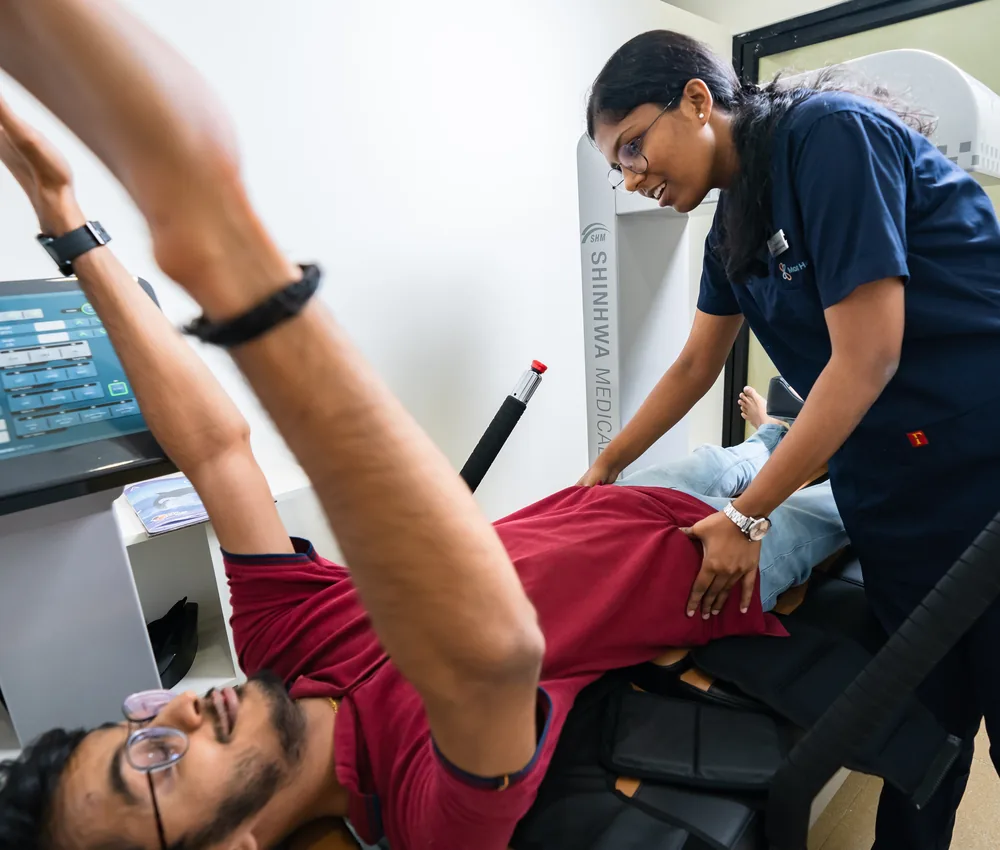
Without spinal cord signs (for example, neck pain or arm symptoms from a narrowed nerve opening): treatment follows Maana Spine DTX™, our personalised, non-surgical Precision Spine Care program:
 Assess: we identify what's driving your symptoms and check carefully for spinal cord signs.
 Decompress: where it suits your condition, computer-controlled spinal decompression with cervical positioning, using US FDA 510(k)-cleared technology. If decompression isn't suitable, we use other therapies, such as pulsed signal therapy (PST).
 Restore: mobility work and physiotherapist-led stretching.
 Strengthen: our four-level exercise roadmap (Level 1 Restore, Level 2 Stabilise, Level 3 Strengthen, Level 4 Maintain).
 Empower: habits for work, screens, riding and sleep, with written and app-based home exercise programmes.
 Maintain: in-person follow-up at 1, 3, 6 and 12 months. The 1- and 3-month follow-ups are included in your program fee; the 6- and 12-month reviews are charged separately.
A DTX program is typically 15 to 25 sessions of 60 to 75 minutes each.
With spinal cord signs (myelopathy): we refer you to a doctor first. If you and your doctor decide on a period of non-surgical care, or after surgery, structured rehabilitation can be part of your recovery.
What the research and guidelines say
Myelopathy. A 2017 international guideline (AO Spine North America and the Cervical Spine Research Society) describes degenerative cervical myelopathy as a progressive condition and the most common cause of spinal cord problems in adults. It recommends:
- surgery for moderate and severe myelopathy
- either surgery or a supervised trial of structured rehabilitation for mild myelopathy, with surgery if symptoms get worse or don't improve
Neck pain and arm pain without cord compression. The 2017 neck pain guideline from the American Physical Therapy Association recommends exercise and hands-on therapy for many types of neck pain. For neck pain spreading into the arm, it suggests intermittent neck traction combined with manual therapy and strengthening exercises.
Surgery
For moderate or severe myelopathy, surgery is the recommended treatment. For stenosis without spinal cord signs, non-surgical care is a reasonable first step for most people, and surgery stays available. If your assessment suggests you should see a doctor or surgeon, we'll tell you honestly.
Practical tips
- Know the warning signs above, and act on them early.
- Avoid sudden, forceful neck movements, and don't have your neck manipulated if you have, or may have, myelopathy without a doctor's advice.
- Keep gently active, following your physiotherapist's advice.
These are general tips, not a substitute for an assessment.
When to book
Book a spine assessment for neck pain or arm symptoms without the myelopathy warning signs above. If you have those signs, see a doctor first. Spine assessments are available at all five Maana Spine clinics in Kochi, Kozhikode, Thiruvananthapuram, Aluva and Perinthalmanna. The consultation fee is ₹250, and no doctor's referral is needed.
Book a Spine Assessment · or call or WhatsApp +91 99950 09403
Frequently asked questions
What are the first signs of cervical myelopathy?
Common early signs include clumsy hands, numbness in both hands, unsteadiness or falls, and an electric-shock feeling when bending the neck forward. They're often put down to age, so see a doctor if you notice them.
Can cervical spinal stenosis be treated without surgery?
It depends. Stenosis causing neck pain or arm symptoms, without pressure on the spinal cord, is often managed without surgery. For moderate or severe myelopathy, guidelines recommend surgery. For mild myelopathy, surgery or a supervised trial of rehabilitation are both options, decided with a doctor.
Is spinal decompression safe for cervical stenosis?
It depends on your condition. If you have signs of spinal cord pressure, we'll refer you to a doctor before deciding on any treatment.
Does cervical myelopathy get worse?
It's usually progressive, which is why early assessment by a doctor matters.
What's the difference between cervical radiculopathy and myelopathy?
Radiculopathy affects a nerve root and usually causes pain, tingling or weakness in one arm. Myelopathy affects the spinal cord and can cause clumsy hands, problems in both hands, and balance or walking problems.
Can physiotherapy help after cervical spine surgery?
Structured rehabilitation is often part of recovery after surgery. Your surgeon will advise when it's safe to start.
References
- Fehlings MG, Tetreault LA, Riew KD, et al. A clinical practice guideline for the management of patients with degenerative cervical myelopathy. Global Spine Journal, 2017;7(3 Suppl):70S–83S. doi.org/10.1177/2192568217701914
- Davies BM, et al. BMJ, 2018. ncbi.nlm.nih.gov/pmc/articles/PMC6074604
- Blanpied PR, Gross AR, Elliott JM, et al. Neck Pain: Revision 2017. Journal of Orthopaedic & Sports Physical Therapy, 2017;47(7):A1–A83. doi.org/10.2519/jospt.2017.0302
- Australian Physiotherapy Association. Vertebrobasilar insufficiency and cervical arterial dissection factsheet, 2025. australian.physio