
Written by Ansu Susan Kuriakose, BPT · Clinically reviewed by Jasmal K, BPT, MPT · Last reviewed 5 October 2026
Cervical spondylosis: neck pain from age-related changes, and how it's treated
"Cervical spondylosis" is one of the most common findings on neck X-rays and MRI scans. It describes age-related changes in the joints and discs of the neck. Many people with these changes have no pain. When they do cause pain and stiffness, structured, non-surgical care can help you move more freely.
Book a Spine Assessment · or call or WhatsApp +91 99950 09403

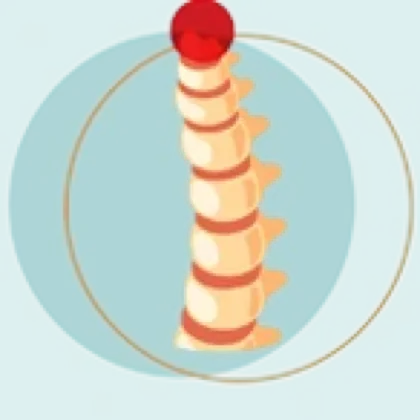
What is cervical spondylosis?
"Cervical" means the neck, and "spondylosis" means age-related wear in the spine. Cervical spondylosis can include:
- disc changes: the discs between the neck bones losing water and height, sometimes bulging
- facet joint changes: wear in the small joints at the back of the neck
- bone spurs (osteophytes): small bony growths at the edges of the vertebrae
Sometimes these changes press on a nerve root, causing arm symptoms (cervical radiculopathy), or narrow the spinal canal (cervical spinal stenosis).
The same kind of change in the lower back is called lumbar spondylosis.
Symptoms
Many people have no symptoms. When cervical spondylosis does cause problems, you may notice:
- neck pain and stiffness, often worse after holding one position
- reduced movement, such as difficulty turning to look over your shoulder
- pain spreading to the shoulders or between the shoulder blades
- headaches starting at the back of the head
- pain, pins and needles or numbness in an arm or hand, if a nerve is irritated
When neck pain needs urgent help
How it's diagnosed
At your Maana Spine assessment, your physiotherapist asks about your symptoms, checks how your neck and upper back move, tests the strength, sensation and reflexes in your arms (and legs, if needed), and reviews any MRI, X-ray or lab reports you bring. Because spondylosis is so common on scans, the aim is to work out what's actually causing your symptoms.
You'll get a physiotherapy diagnosis and a personalised plan. You don't need a scan to book; if one would help, your physiotherapist will recommend an MRI or X-ray.
How we treat cervical spondylosis at Maana Spine
Treatment follows Maana Spine DTX™, our personalised, non-surgical Precision Spine Care program:
 Assess: we identify what's driving your pain and check for any signs that need a doctor.
 Decompress: where it suits your condition, computer-controlled spinal decompression with cervical positioning, using US FDA 510(k)-cleared technology. If decompression isn't suitable, we use other therapies, such as pulsed signal therapy (PST).
 Restore: mobility work and physiotherapist-led stretching, with shockwave therapy (ESWT) for tight, tender trigger points where needed.
 Strengthen: our four-level exercise roadmap (Level 1 Restore, Level 2 Stabilise, Level 3 Strengthen, Level 4 Maintain) for the deep neck, shoulder and upper-back muscles.
 Empower: practical changes for work, screens, riding and sleep, with written and app-based home exercise programmes.
 Maintain: in-person follow-up at 1, 3, 6 and 12 months. The 1- and 3-month follow-ups are included in your program fee; the 6- and 12-month reviews are charged separately.
A DTX program is typically 15 to 25 sessions of 60 to 75 minutes each, usually with the same physiotherapist throughout.
What the research says
Exercise and hands-on care. The 2017 neck pain guideline from the American Physical Therapy Association recommends exercise and hands-on (manual) therapy for many types of neck pain. For pain spreading into the arm, it suggests intermittent neck traction may help when combined with manual therapy and strengthening exercises.
Decompression for the neck. A 2019 double-blind trial of 40 people with a disc problem at the C5-C6 level found pain improved in both groups, while function and disc measurements improved more with traction designed to keep the neck's natural curve. Neck research is thinner than for the lower back, so decompression is always one part of a wider plan.
PST (pulsed signal therapy). PST is a type of pulsed electromagnetic field (PEMF) therapy and is CE-marked. Reviews of PEMF have mostly studied the lower back, where it reduced long-lasting pain. We haven't found good-quality PEMF trials specifically in cervical spondylosis.
Will I need surgery?
Most people with cervical spondylosis don't need surgery. Surgery is considered when there are signs of pressure on the spinal cord, or worsening weakness. Non-surgical care is a reasonable first step for most people. If your assessment suggests you should see a doctor or surgeon, we'll tell you honestly.
Practical tips
- Keep your neck moving with gentle movements through the day.
- Change position often at work, on your phone and on long rides.
- Use a supportive pillow that keeps your neck comfortable.
- Keep up your home programme. Regular exercise makes the biggest long-term difference.
These are general tips, not a substitute for an assessment.
When to book a spine assessment
Book an assessment if neck pain or stiffness has lasted more than a couple of weeks, keeps coming back, spreads into your arm, or causes headaches. Spine assessments are available at all five Maana Spine clinics in Kochi, Kozhikode, Thiruvananthapuram, Aluva and Perinthalmanna. The consultation fee is ₹250, and no doctor's referral is needed.
Book a Spine Assessment · or call or WhatsApp +91 99950 09403
What patients say

I had been suffering from severe neck and back pain for five years because of a C4–C7 disc bulge. Despite trying several treatments, I couldn't find relief until I visited Maana Health. After 20 sessions of spinal decompression therapy and excellent care, I now have around 80% relief from my pain. I would highly recommend Maana Health to anyone looking for non-surgical treatment options for spine-related problems.
Varghese M.Cervical spondylosis and a C4–C7 disc bulge

I was suffering from neck pain and cervical spondylosis, and I received treatment at Maana Health. The proper treatment and therapies here helped reduce my pain significantly. I would recommend Maana Health to anyone looking for non-surgical treatment options for spine-related problems.
Murtaza A.Cervical spondylosis

I was struggling with neck pain and spine-related problems when I came to know about Maana Health. I opted for a 10-day treatment package that included spinal decompression, physiotherapy and electrotherapy. After completing the treatment, I experienced significant improvement in my pain and felt great relief. I would recommend Maana Health to anyone looking for effective, non-surgical treatment options for spine-related problems.
Sajeesh T.S.Neck pain and spine problems
Shared with each patient's written consent. These are individual experiences; results vary.
Frequently asked questions
Is cervical spondylosis serious?
Usually not. It's a common age-related change, and many people have it without pain. It needs a doctor's attention if you notice clumsy hands, numbness in both hands, unsteadiness or falls, which can be signs of pressure on the spinal cord.
Can cervical spondylosis be reversed?
The age-related changes themselves don't reverse. But pain and stiffness often improve a great deal with exercise, hands-on treatment and changes to daily habits.
Can cervical spondylosis cause dizziness?
Neck problems are sometimes linked to dizziness, but dizziness has many causes. Sudden dizziness with severe neck pain, double vision, or difficulty speaking or swallowing needs emergency care. Otherwise, mention it at your assessment so it can be checked properly.
What exercises are good for cervical spondylosis?
Gentle mobility exercises and strengthening for the deep neck, shoulder and upper-back muscles help many people. Your physiotherapist will tailor them to your symptoms.
Is spinal decompression safe for cervical spondylosis?
It depends on your condition. Your physiotherapist checks whether decompression suits you at your assessment. If you have signs of pressure on the spinal cord, we'll refer you to a doctor before deciding on treatment.
What's the difference between cervical spondylosis and cervical radiculopathy?
Spondylosis describes the age-related changes. Radiculopathy is when a nerve root in the neck is irritated, causing pain, tingling, numbness or weakness in the arm. Spondylosis is one possible cause of radiculopathy.
References
- Blanpied PR, Gross AR, Elliott JM, et al. Neck Pain: Revision 2017. Journal of Orthopaedic & Sports Physical Therapy, 2017;47(7):A1–A83. doi.org/10.2519/jospt.2017.0302
- Lee CH, et al. International Journal of Environmental Research and Public Health, 2019;16(12):2162. doi.org/10.3390/ijerph16122162
- Sun X, Huang L, Wang L, et al. Clinical Rehabilitation, 2022;36(5):636–649. pubmed.ncbi.nlm.nih.gov/35077249
- Davies BM, et al. BMJ, 2018. ncbi.nlm.nih.gov/pmc/articles/PMC6074604
- Australian Physiotherapy Association. Vertebrobasilar insufficiency and cervical arterial dissection factsheet, 2025. australian.physio