
Written by Ansu Susan Kuriakose, BPT · Clinically reviewed by Jasmal K, BPT, MPT · Last reviewed 5 October 2026
Sciatica: causes, how long it lasts, and non-surgical treatment
Sciatica is pain that travels from your lower back or buttock down your leg, often below the knee. It can be sharp, burning or electric, and it can make sitting, walking and sleeping difficult.
The good news is that sciatica usually improves. Most people get better without surgery, many within weeks. When it doesn't settle, or keeps coming back, a structured plan that targets the cause can help.
Book a Spine Assessment · or call +91 99950 09403
What is sciatica?
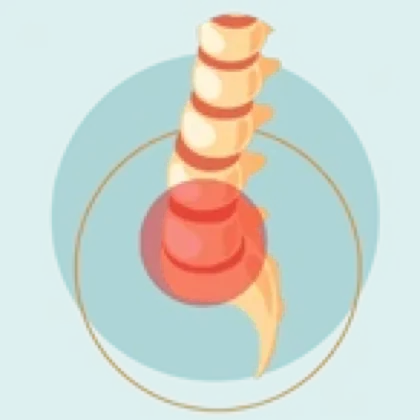
Sciatica isn't a diagnosis in itself. It's a description of symptoms caused by irritation or compression of one of the nerve roots that join to form the sciatic nerve, the longest nerve in the body. It runs from your lower back, through your buttock and down the back of each leg to your foot.
When a nerve root in the lower back is irritated, you feel the pain along the path of the nerve, in your leg, even though the problem is in your spine.
Symptoms of sciatica
- Pain spreading from the lower back or buttock down the back or side of one leg, often below the knee and sometimes into the foot
- Leg pain that's often worse than any back pain
- Burning, shooting or electric-shock pain
- Numbness, tingling or "pins and needles" in the leg or foot
- Weakness in the leg or foot
- Pain that's worse when sitting, bending, coughing or sneezing
Sciatica usually affects one leg. Sciatica in both legs can be a warning sign (see below).
What causes sciatica?
- A slipped (herniated) disc is by far the most common cause. Disc material presses on or irritates a nerve root.
- Lumbar spinal stenosis: narrowing of the spinal canal, more common after age 50. It often causes leg pain or heaviness when walking that eases when you sit or bend forward.
- Spondylolisthesis: a vertebra slipping forward and narrowing the space for the nerve.
- Degenerative disc disease, where age-related disc changes narrow the openings the nerves pass through.
Some conditions cause sciatica-like pain without a nerve root being compressed in the spine:
- Piriformis syndrome, where a deep buttock muscle irritates the sciatic nerve
- Sacroiliac joint pain, which can refer pain into the buttock and thigh
Rarely, sciatica is caused by infection or a tumour, which is why red flags matter.
Finding out which of these is behind your pain is the first step in treating it properly.
When sciatica is an emergency
Go to a hospital emergency department straight away if sciatica comes with:
- sciatica in both legs
- numbness around your genitals, inner thighs or bottom
- new difficulty passing urine, or loss of bladder or bowel control
- leg weakness that's getting worse
These can be signs of cauda equina syndrome, a rare but serious condition that needs emergency treatment.
How long does sciatica last?
For most people, the outlook is good.
- Many people with recent sciatica notice clear improvement within the first few weeks.
- A 2024 medical review found that symptoms resolve in 60% to 80% of people with a herniated disc within 6 to 12 weeks, and in 80% to 90% over the long term.
Sciatica that lasts less than three months is usually called acute. Sciatica lasting three months or more is called chronic. Chronic or recurring sciatica is more likely to need a structured treatment plan, and sometimes a surgical opinion.
How sciatica is diagnosed
At your Maana Spine assessment, your physiotherapist asks about your symptoms, checks how your back moves, and tests the nerves in your legs: strength, sensation and reflexes. Specific tests help show whether a nerve root is irritated and at which level.
Do you need an MRI? Not always. Imaging is usually reserved for severe or worsening symptoms, red flags, or sciatica that isn't improving after several weeks. Interestingly, in a major sciatica trial, MRI scans taken a year later couldn't tell apart the people who had recovered from those who hadn't: a disc herniation was still visible in about a third of both groups. How you feel and function matters more than how your scan looks.
How we treat sciatica at Maana Spine
Sciatica is treated through Maana Spine DTX™, our personalised, non-surgical Precision Spine Care program.
 Assess: we identify what's irritating the nerve and rule out red flags.
 Decompress: if your sciatica comes from a disc, computer-controlled spinal decompression is often a central part of the plan. If your pain is severe and recent, we first focus on easing it, then move on to decompression once your symptoms settle. If decompression isn't suitable, we use other therapies.
 Restore: gentle, nerve-friendly movement, mobility work and physiotherapist-led stretching. For buttock-related causes such as piriformis syndrome, shockwave therapy (ESWT) and targeted muscle release may be used.
 Strengthen: a structured Level 1 to Level 4 exercise progression for core strength and spinal stability.
 Empower: how to sit, sleep, lift, travel and work in ways that calm the nerve and protect your back.
 Maintain: in-person follow-up at 1, 3, 6 and 12 months after your program ends. The 1- and 3-month follow-ups are included in your program fee; the 6- and 12-month reviews are charged separately.
A DTX program is typically 15 to 25 sessions of 60 to 75 minutes each.
What the research says
Decompression for sciatica from a disc. Sciatica caused by a herniated disc is where the evidence for spinal decompression is strongest. In a 2022 sham-controlled trial, people with a recent disc herniation who received real decompression had less leg pain at two months and better function at two and three months than those who received a sham treatment. A separate 2022 trial found that adding decompression to physiotherapy improved outcomes more than physiotherapy alone in people with nerve pain from the lower back.
Guidelines. The UK's NICE guideline recommends exercise programmes as a core treatment. That's why decompression at Maana Spine is always combined with exercise-based rehabilitation.
Medicines. NICE advises against some medicines often prescribed for sciatica, including gabapentinoids (such as gabapentin and pregabalin), oral steroids and benzodiazepines, and advises against opioids for chronic sciatica. If you're taking any of these, don't stop suddenly: talk to your doctor.
Sciatica and surgery
Most people with sciatica don't need surgery. In a major randomised trial, early surgery gave faster relief of leg pain, but outcomes at one year were similar to non-surgical care with surgery later if needed. Surgery is usually considered when non-surgical treatment hasn't improved pain or function and an MRI matches the symptoms, or urgently if weakness is severe or worsening.
Living with sciatica: practical tips
- Keep gently active. Short walks are usually better than lying in bed.
- Avoid sitting for long periods. Sitting often aggravates sciatica. Stand and move regularly, and break up long car or two-wheeler journeys where you can.
- Find a comfortable sleeping position. Many people find lying on their side with a pillow between the knees, or on their back with a pillow under the knees, easier.
- Don't push through sharp, spreading pain when exercising. Your physiotherapist will show you which movements suit your nerve.
These are general tips, not a substitute for an assessment.
Book a spine assessment
Spine assessments are available at all five Maana Spine clinics in Kochi, Kozhikode, Thiruvananthapuram, Aluva and Perinthalmanna. The consultation fee is ₹250, and no doctor's referral is needed.
Book a Spine Assessment · or call +91 99950 09403
What patients say

I was suffering from lower back pain that radiated down my leg. The treatment I received at Maana Health was very effective. The therapies and excellent care helped reduce my pain and made it easier for me to return to my normal daily activities.
Steven B.Spondylolisthesis

I was struggling with lower back pain that radiated down my leg, which made even daily activities difficult. The therapies and the care from the doctors and therapists at Maana Health helped me manage the pain and get back to my normal routine. I would definitely recommend Maana Health to anyone looking for non-surgical treatment options for back pain.
Ashraf T.M.Lumbar disc bulge
Shared with each patient's written consent. These are individual experiences; results vary.
Frequently asked questions
How long does sciatica last?
Many people improve within a few weeks. A 2024 medical review found symptoms resolve in 60% to 80% of people with a herniated disc within 6 to 12 weeks. Sciatica lasting three months or more is called chronic and usually needs a structured treatment plan.
Can sciatica go away on its own?
Often, yes. Sciatica generally has a good outlook, and many people recover without specific treatment. Get assessed if your pain is severe, isn't improving after a few weeks, keeps coming back, or comes with numbness or weakness.
How is sciatica treated?
It depends on the cause. For most people, the first step is staying active and a structured, exercise-based program. If your sciatica comes from a disc, spinal decompression combined with rehabilitation may help. Surgery is considered when non-surgical care hasn't worked or symptoms are severe.
Is walking good for sciatica?
Usually, yes. Gentle walking keeps you moving and is generally better than bed rest. If walking makes leg pain much worse, especially pain that eases when you sit or bend forward, it may point to spinal stenosis, so get assessed.
Is spinal decompression good for sciatica?
Sciatica from a herniated disc is where decompression has its strongest evidence, including a sham-controlled trial showing less leg pain and better function. At Maana Spine, decompression is always combined with exercise-based rehabilitation.
Do I need an MRI for sciatica?
Not always. An MRI is usually recommended if symptoms are severe or getting worse, if there are red flags, or if sciatica isn't improving after several weeks.
Is sciatica in both legs serious?
It can be. Sciatica in both legs, especially with numbness around the genitals or bottom or bladder or bowel changes, can be a sign of cauda equina syndrome. Go to a hospital emergency department straight away.
Can sciatica come back?
Yes, it can. That's why DTX includes strengthening, guidance on everyday movement, and follow-up at 1, 3, 6 and 12 months.
References
- Lumbar disc herniation: a review. Deutsches Ärzteblatt International, 2024. di.aerzteblatt.de/int/archive/article/239989
- Koes BW, et al. Sciatica: what the rheumatologist needs to know. Nature Reviews Rheumatology, 2010. nature.com/articles/nrrheum.2010.3
- el Barzouhi A, et al. Magnetic resonance imaging in follow-up assessment of sciatica. New England Journal of Medicine, 2013. nejm.org/doi/full/10.1056/NEJMoa1209250
- Peul WC, et al. Surgery versus prolonged conservative treatment for sciatica. New England Journal of Medicine, 2007. pubmed.ncbi.nlm.nih.gov/17538084
- National Institute for Health and Care Excellence (NICE). Low back pain and sciatica in over 16s: assessment and management (NG59). 2016, last updated July 2026. nice.org.uk/guidance/ng59/chapter/recommendations
- Choi E, et al. Effect of nonsurgical spinal decompression on intensity of pain and herniated disc volume in subacute lumbar herniated disc. International Journal of Clinical Practice, 2022. doi.org/10.1155/2022/6343837
- Non-surgical decompression therapy in addition to routine physical therapy versus routine physical therapy alone in patients with lumbar radiculopathy: a randomized controlled trial. 2022. pubmed.ncbi.nlm.nih.gov/35296293